In spring, when apple trees burst into bloom, a small insect makes its appearance: the apple sawfly (Hoplocampa testudinea ). This pest causes significant damage to developing fruit, leaving behind deformed or prematurely fallen apples. For orchardists, knowing how to detect its presence and taking the right steps at the right time is key to preserving the harvest without disrupting the orchard’s balance. Discover how to identify it and which natural control methods to adopt.
Description of the european apple sawfly
The apple sawfly (Hoplocampa testudinea) belongs to the Tenthredinidae family . This hymenopteran, halfway between a fly and a wasp, easily goes unnoticed in the orchard, especially during its rapid flight around the flowers.
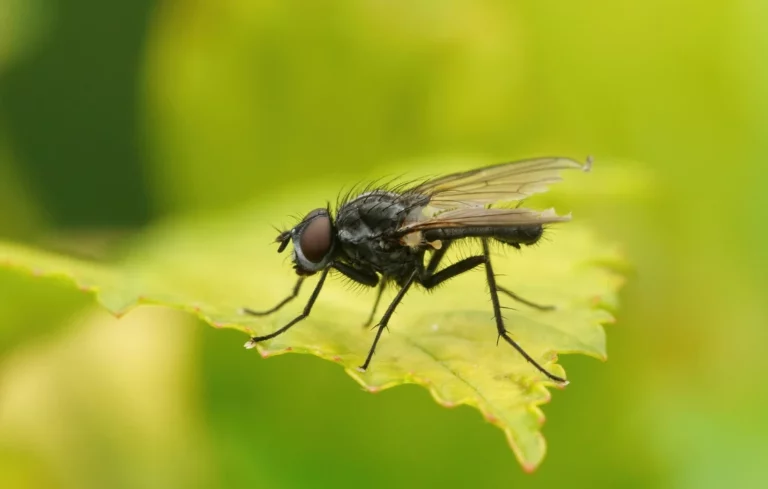
The adult measures between 5 and 7 millimeters . Its appearance is reminiscent of a small wasp:
- The ventral side is yellowish brown , while the dorsal side displays a glossy black .
- The yellow head contrasts with the rest of the body.
- The hyaline wings , thin and transparent, are marked with brown to black veins and fold horizontally over the back when at rest.
The apple sawfly larva is a false caterpillar measuring 12 to 14 mm , with a whitish to yellowish-green , slightly curved body. It has a small brown head , three pairs of thoracic legs and seven pairs of abdominal prolegs .
The egg, small and translucent , measures approximately 1 millimeter .
What damage does the apple tree sawfly cause?
The apple sawfly arrives in the orchard as soon as the blossoms appear. Attracted by the white flowers , the females lay their eggs under the sepals. Ten to fourteen days later, the larvae hatch and quickly burrow into the young fruit. Their voracious appetite leaves little chance for the developing apples: the inside of the fruit is hollowed out , and then the larva moves on to another, causing a series of internal injuries.
One larva can attack several fruits.
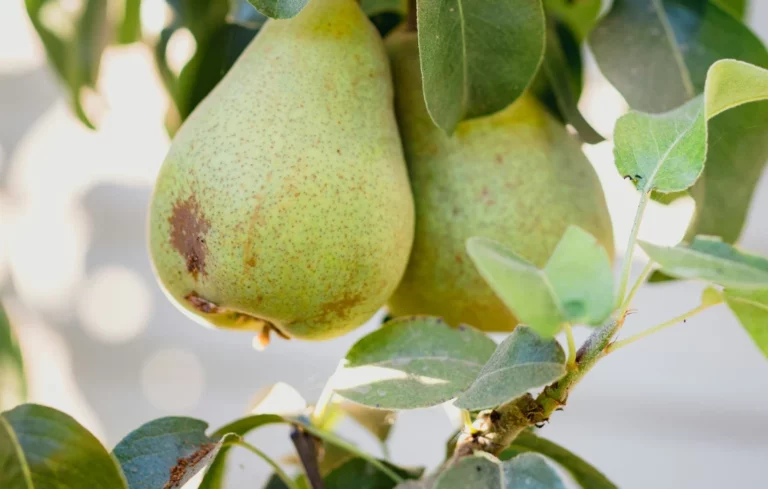
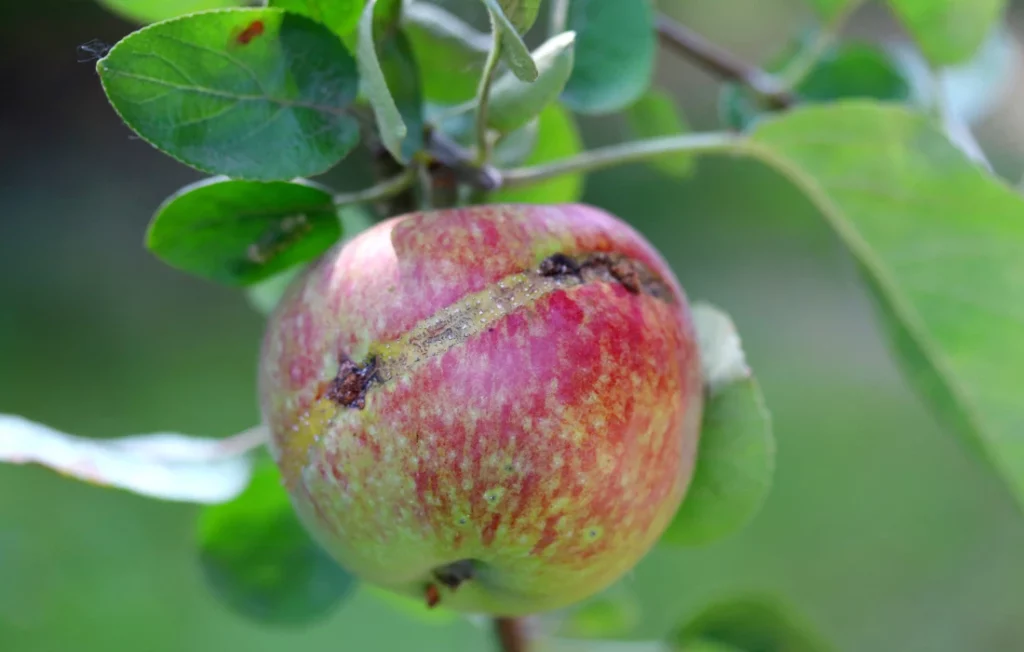
Infested fruit often has a small hole in the calyx , accompanied by dark exudates or spores. Apple trees with light fruit loads react poorly to these attacks: most infested fruit falls off before it has even grown. Those that remain show corky scars visible at harvest, a sign of a previous infestation by the pest.
Early-flowering varieties are particularly susceptible, as their flowering coincides more closely with the flight period of the adults. A simple clue to distinguish a sawfly infestation from codling moth damage is that the symptoms appear much earlier, before fruit set.
Do you need a natural solution against apple tree sawfly?
Cycle de vie d’holocampa testudinea
L’hoplocampe du pommier ne produit qu’une génération par an. Après avoir dévasté plusieurs fruits, la larve se laisse tomber au sol avec les jeunes pommes atteintes. Elle s’y enfonce à quelques centimètres de profondeur pour tisser un cocon faLife cycle of Holocampa testudinea
The apple sawfly produces only one generation per year . After devastating several fruits, the larva drops to the ground with the young, infested apples. It burrows a few centimeters deep to spin a cocoon made of soil particles. There, it spends the winter, sometimes even two, before resuming its activity the following spring.
This behavior makes the pest difficult to control: part of the population remains dormant for another year, ensuring a regular presence in the orchard.
How to detect the presence of apple tree sawflies?
One of the best ways to monitor the presence of the pest is to set white sticky traps , installed as soon as the “green buds” stage appears. Their color attracts adults, especially females ready to lay eggs.
Some practical tips:
- Place the traps in the middle part of the trees, sheltered from wind and direct rain.
- Check them two to three times a week to note the first captures.
The flight period typically lasts two to three weeks, between April and May. There is no strict intervention threshold, but high activity combined with damage observed the previous year should raise concern. In this case, prompt action after flowering helps limit egg-laying and larval penetration into the fruit.
Agrobiotop solutions for controlling apple sawfly
We develop natural solutions to combat this apple tree pest.
We recommend:
- YAKAPRO (Foliar spray application. Dosage: 10%. May disrupt the coloration of white flowers)
Mixture of Agrobiotop solutions:
- CHITOPROTECT (chitosan)
- BENTOBIO (Sodium bentonite clay)
For foliar application at the green bud stage.
Mixture: 300 liters of water per hectare. CHITOPROTRECT 1.5L + 3kg BENTOBIO/300L of water/hectare.
Does not block photosynthesis in apple trees.
Do not hesitate to contact us for more information on the protocol to apply against this pest.
Photo : Shutterstock
Other problems with fruit trees: