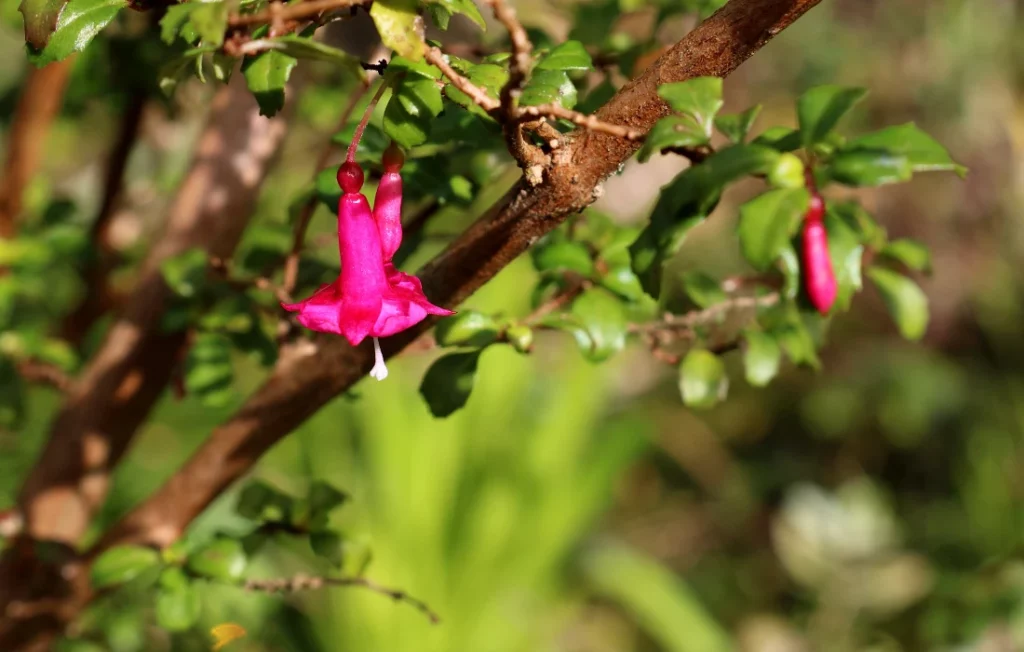
Fuchsia gall, caused by the fuchsia mite Aculops fuchsia, is a disease that is still too often misidentified. Blistered leaves, thickened young shoots, and stunted flower buds: the symptoms are surprising and worrying. For both gardeners and professionals, recognizing this gall and knowing how to react helps limit losses, preserve the ornamental quality of fuchsias, and adopt practices suited to sustainable crop management.
What is fuchsia gall mite ?
Fuchsia gall is a disease specific to fuchsias, caused by a phytophagous mite called Aculops fuchsiae. This pest belongs to the group of phytoptes, mites that feed directly on plant tissues . The distinctive feature of this gall lies in its mode of action: the damage is not caused by visible bites, but by a profound disruption of the plant’s cell development, resulting in dramatic deformities.
Initially described in South America, this gall has gradually spread. It was reported in the United States, particularly in California, as early as the 1980s, before reaching Europe in the early 2000s . In France, the first confirmed cases were in Brittany in 2003. Since then, vigilance has been essential in all fuchsia growing areas, both in gardens and in greenhouse production.
Identification of the fuchsia gall mite
The mite responsible for fuchsia gall mite is invisible to the naked eye . Direct detection requires a magnifying glass, which explains the difficulties encountered during the early stages of infestation. The adult female measures approximately 0.25 mm . Its body is elongated, very pale yellow to whitish in color, with only two pairs of legs, a characteristic of Phytoptes mites.
The mouthparts consist of five stylets, including two hooks, used to pierce plant tissue. These punctures trigger abnormal reactions in the plant, resulting in galls. The mite spends its entire life cycle inside these deformed tissues, making it even more difficult to detect directly.
Do you need a natural solution against fuchsia gall mite ?
Biology of Aculops fuchsiae
The life cycle of this mite takes place almost entirely in the shelter of the galls it creates itself. Feeding bites cause the formation of internal galleries where the mite feeds, reproduces, and finds shelter. Each female can lay up to fifty eggs , which hatch on average after seven days when conditions are favorable.
As the fuchsia grows, the mites continually migrate to the young tissues. They abandon the old galls to colonize new leaves , buds, or developing shoots. This dynamic explains the rapid progression of symptoms on a plant initially localized to a single spot.
The spread of fuchsia gall relies on both natural mechanisms and those linked to human practices. The mite can be transported short distances by wind or passively by certain insects. However, the main factor in its spread remains the movement of contaminated plant material.
The exchange of infested cuttings and the transport of plants bearing galls are the most frequent means of dissemination. An apparently healthy plant can already harbor the pest at an early stage, without any clear symptoms, which complicates detection during exchanges.
A regulated body under surveillance
Aculops fuchsiae has a strict regulatory status: it is classified as a regulated pest and a quarantine organism for Europe. It is listed in Annex IIA1 of Directive 92/103/EC, which implies enhanced monitoring and vigilance measures during plant trade. This status reflects the severity of the damage observed and the ease with which the mite can be disseminated on a large scale, particularly through the trade of infested plants or cuttings.
The plants under attack
Fuchsia gall only affects fuchsias. Not all species react in the same way, with some proving significantly more susceptible than others. Observations show marked vulnerability in:
- Fuchsia arborescens
- Fuchsia magellanica
- Fuchsia procumbens
Varieties grown in protected conditions, in greenhouses or under shelters, are particularly exposed, as the mite can survive there throughout the year.
Periods of risk and favorable conditions
Outdoors, infestations develop mainly from spring to autumn, when fuchsia growth is active. Under cover, the continuous presence of young tissue allows the pest to persist without seasonal interruption.
Several environmental factors contribute to its development:
- Mild to cool climate
- Humid atmosphere
- Grown in greenhouses or under shelter
These conditions are common in coastal or oceanic climate regions, which explains why some areas are more affected than others.
Damage caused by fuchsia gall mite
Damage caused by fuchsia gall mite is often severe. The most susceptible parts are the foliage, terminal buds, and young shoots . Flowers can also be affected, secondarily, as the infestation progresses.
The consequences for the plant are numerous: a marked slowing of growth, then an almost complete halt in development. Eventually, progressive decline sets in. In the most advanced situations, destroying infested plants sometimes becomes the only option to limit the spread.
Diagnosing fuchsia gall mite can be tricky at first. The mite’s microscopic size makes direct observation impossible, and the initial signs are often subtle. However, the symptoms become very characteristic once the infestation is established. These include:
- A slight wilting of the terminal buds
- The appearance of a white film on the leaves, which may indicate powdery mildew.
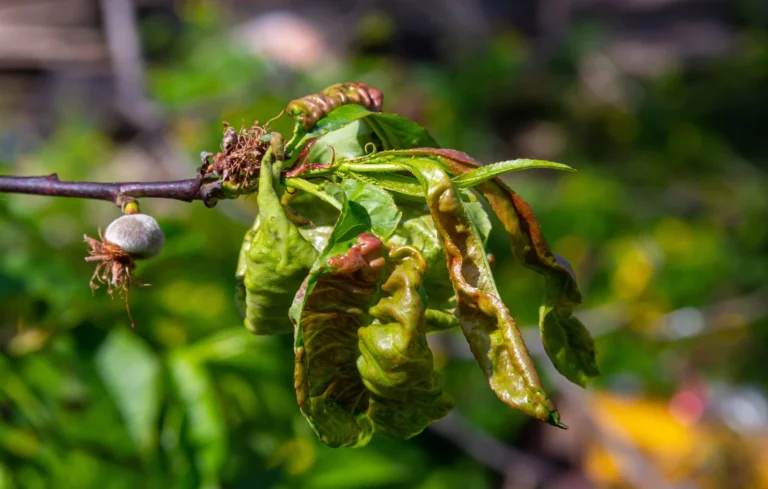
Over time, the symptoms on the foliage worsen. The leaves become deformed, take on a reddish hue, and develop pronounced blisters. Pale green galls appear, gradually turning red, accompanied by significant swelling of the plant tissues.
The young shoots turn red and become deformed. The flowers may become irregular, especially in late autumn and winter. This point deserves particular attention, as some floral deformities at this time are related to the change in photoperiod and not to a parasitic attack.
Agrobiotop solutions against fuchsia aculops
- CHITOPROTECT (chitosan)
- BENTOBIO
Biostimulant
Please do not hesitate to contact us for more information on the protocol to apply against this pest.
Photo : Shutterstock