Gall midges are pests capable of rapidly disrupting the balance of a crop. It is the larvae of this insect that can cause significant damage to plant tissues. Cereals, vegetables, fruit trees, and specialty crops can all be affected. How can you identify this pest? What damage is observed? And how can you control it effectively? Our solutions.
Description of gall midges
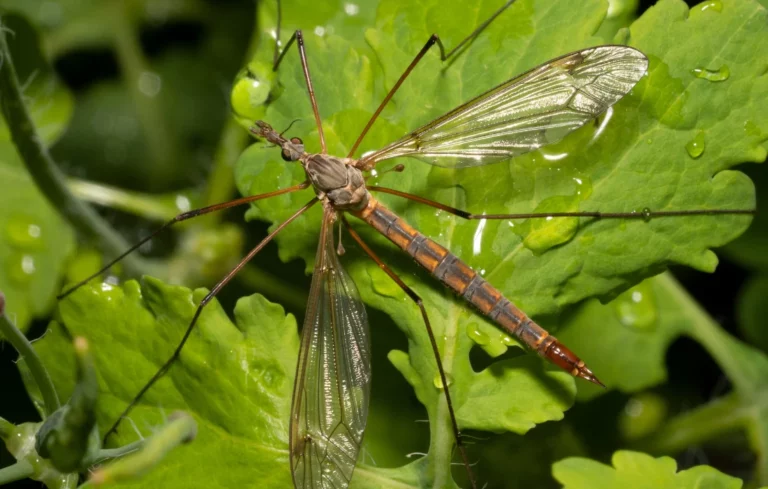
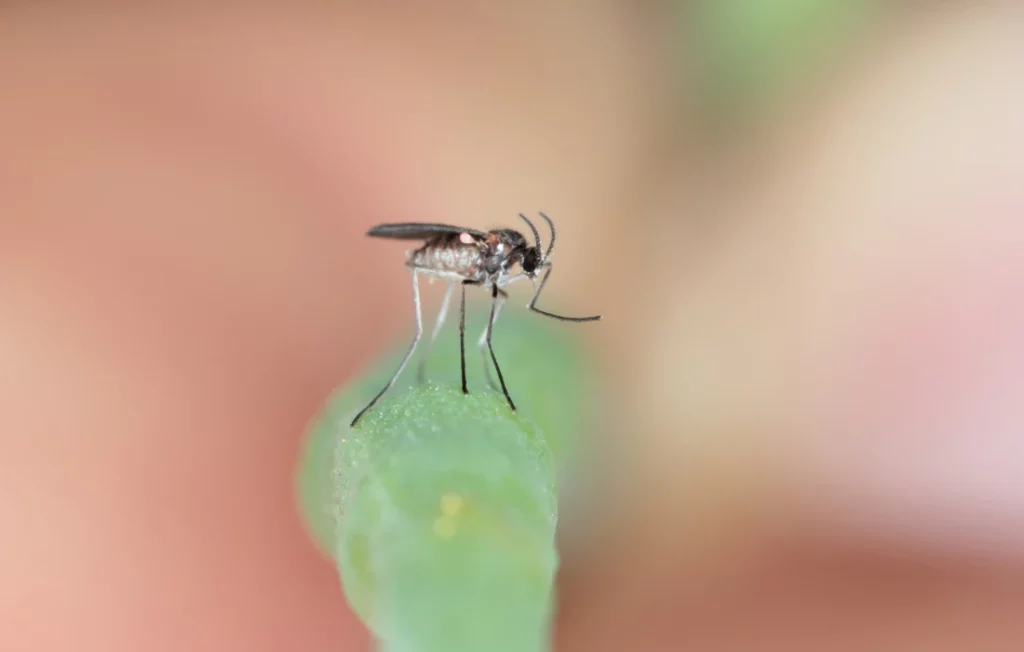
The Cecidomyiidae family comprises over 6,000 described species worldwide. Adult gall midges are very small flies, generally 1 to 3 mm long, with slender bodies and elongated legs. They belong to the Nematocera order, like mosquitoes. Their antennae are long and finely segmented. Their narrow wings, covered in fine hairs, have severely reduced venation, a characteristic of this family.
In adults, the mouthparts are poorly functional. The insect feeds little or not at all after emergence. Its lifespan is short, and its activity is focused on reproduction. The female lays her eggs quickly after mating, directly on the host plant, and then disappears.
The larvae are legless maggots with soft, cylindrical bodies, generally measuring 2 to 3 mm when mature. Their coloration varies depending on the species, from yellowish-white to orange or red. The head is barely visible, equipped with stylet-like mandibles that allow them to directly attack plant tissues.
Do you need a natural solution against gall midges?
Life cycle
Depending on the species and climatic conditions, the number of annual generations varies greatly. In temperate regions, a single generation per year is common, while several successive generations can occur in warmer climates.
Egg-laying occurs directly on or within plant tissues. The eggs are extremely small, measuring approximately 0.2 to 0.3 mm, and can be laid singly or in small groups. A female is capable of producing anywhere from a few dozen to several hundred eggs.
After hatching, the almost translucent larvae quickly reach their feeding grounds. Their behavior depends closely on the species and host plant. The colonized sites are varied:
- buds and meristems in formation
- leaf or floral tissues
- base of stems or reserve organs
Once established, the larva feeds on plant cells. It can cause direct tissue destruction through abrasion and suction, or disrupt the plant’s normal functioning by inducing the formation of modified tissues, such as galls. The larval stage generally lasts a few weeks, but it is during this time that most of the damage to the crop occurs.
At maturity, the larva often leaves the aerial organ it has been feeding on and drops to the ground. It can also remain protected inside a gall. It then forms a silken cocoon, mixed with soil particles or plant debris. Depending on the species and the season, pupation is immediate or preceded by a prolonged resting phase, sometimes lasting several months, allowing the insect to synchronize its emergence with the development of the host crop.
The main species of gall midges
Many species of Cecidomyiidae are recognized as major agricultural pests worldwide.
Cereal gall midges
- Hessian fly ( Mayetiola destructor ): A major pest of wheat, but also of rye and sometimes barley. The larvae feed at the base of the stems, causing shortened internodes, weakened plants, and the absence or poor formation of ears.
- Orange wheat midge ( Sitodiplosis mosellana ): Found mainly on wheat, but also on barley and rye. The larvae develop in the spikelets after flowering and feed on the developing grain, resulting in stunted grains and a decrease in specific weight.
- Yellow wheat midge ( Contarinia tritici ): Attacks the same crops as the orange wheat midge. The larvae destroy the floral organs before fertilization, leading to completely sterile spikelets with no grain formation.
- Asian rice gall midge ( Orseolia oryzae ): A pest of rice in South and Southeast Asia. The larvae transform the apical meristem into a tubular gall, which prevents heading and renders the tillers unproductive.
- African rice gall midge ( Orseolia oryzivora ): A species closely related to the Asian rice gall midge, found in tropical Africa. It causes similar galls on rice, resulting in sterile tufts and direct panicle loss.
- Sorghum gall midge ( Contarinia sorghicola ): A pest of grain sorghum in many warm regions. The larvae destroy the flower ovaries during flowering, preventing grain formation and potentially rendering the ear almost entirely sterile.
- Millet midge ( Geromyia penniseti ): Specific to pearl millet, particularly in West Africa. The larvae develop in the spikelets and cause ears without grains, with a direct impact on local yields.
- Wheat stem gall midge ( Haplodiplosis marginata ): Present on wheat, barley, and oats. The larvae induce galls under the stem sheath, which weakens the stubble, disrupts sap flow, and can lead to premature bleaching of the ears.
Legume pests gall midges
- Pea midge ( Contarinia pisi ) : A pest of peas, but also of broad beans and forage peas. The larvae develop in the flower buds, resulting in aborted flowers or deformed pods containing few or no seeds.
- Lentil flower gall midge ( Contarinia lentis ): Specific to lentils, primarily in South Asia and the Middle East. The larvae destroy the inside of the flowers, preventing normal pod formation and severely reducing seed production.
- Alfalfa flower gall midge ( Contarinia medicaginis ): Affecting cultivated alfalfa. The larvae consume the reproductive parts of the flowers, causing sterility and a marked drop in seed yield.
- Alfalfa sprout gall midge ( Dasineura ignorata ): Attacks the buds and young shoots of alfalfa. The galls formed on the vegetative tips cause the buds to dry out and hinder regrowth, particularly on seed-bearing alfalfa.
- Soybean pod midge ( Asphondylia yushimai ): A pest of soybeans in East Asia. The larvae develop in young pods, causing blisters, browning of the tissues, and often premature pod drop before grain formation.
Gall midges that are pests of cruciferous plants
- Cauliflower gall midge ( Contarinia nasturtii ): Pest of cabbages, cauliflower, broccoli, Brussels sprouts and rapeseed. The larvae destroy the meristems and buds, causing twisted leaves, corky scars and absence of a marketable head or head.
- Rapeseed pod midge ( Dasineura brassicae ): Primarily attacks rapeseed and other oilseed crucifers. The larvae develop in the young pods, causing them to become deformed, seeds to abort, and a direct drop in yield.
Gall midges, pests of ornamental and forest plants
- Lavender gall midge ( Resseliella lavandulae ): Specific to cultivated lavender and lavandin. The larvae feed under the bark of the stems, causing internal necrosis and partial or total dieback of the branches, with a significant decrease in biomass and essential oil production.
- Black locust gall midge ( Obolodiplosis robiniae ): Pest of black locust trees. The larvae induce marginal curling on the leaflets, leading to yellowing and premature leaf drop, which weakens young trees during repeated attacks.
- Pine needle midge ( Thecodiplosis japonensis ): Attacks several species of pine. The larvae form galls on the needles, causing them to bend, turn yellow, and then dry out, with a progressive weakening of the tree in the case of a heavy infestation.
Agrobiotop solutions for controlling gall midges
Direct action on the gall midge (disrupts molting, reduces appetite for culture)
Indirect action (protection of buds, meristem, bark)
The formation of a biofilm makes it impossible for adults and larvae to move, impacting their molting.
- CHITOPROTECT
- BENTOBIO (Physical barrier against pests)
Do not hesitate to contact us for more information on the protocol to apply against this pest.
Photo : Shutterstock