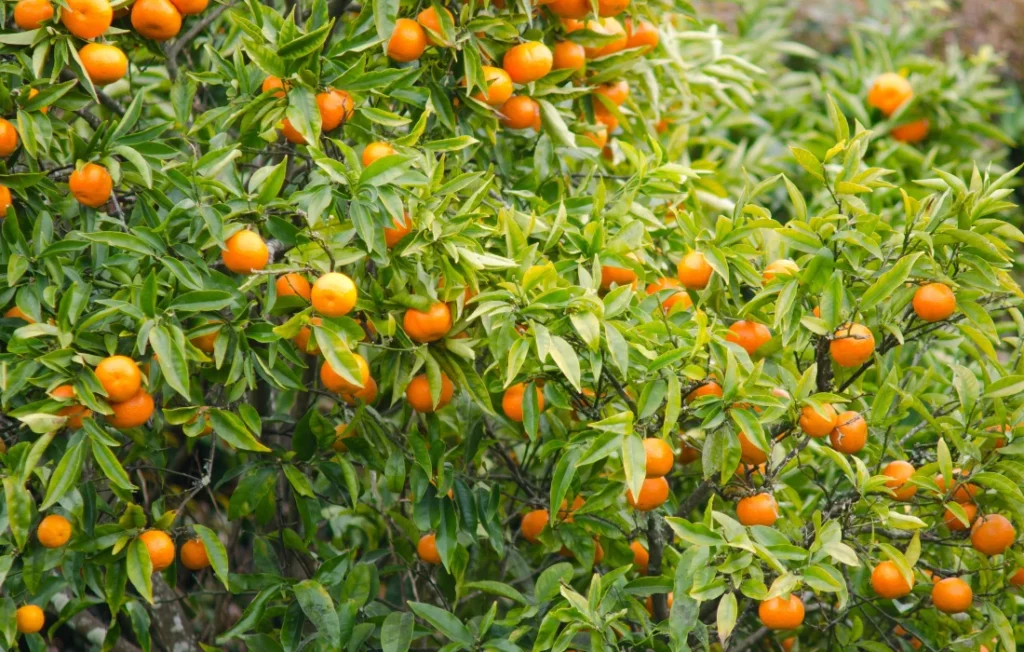
Greasy Spot is a significant citrus disease that primarily affects the foliage. It impacts plant vigor, production quality, and harvest consistency. For growers, a thorough understanding of its mechanisms, development conditions, and effects on citrus physiology allows for informed and consistent action, within a framework of sustainable crop protection, in line with the biological approaches promoted by Agrobiotop.
What is the Greasy Spot?
Greasy spot is a well-known fungal disease in warm-climate citrus-growing areas. It is caused by the fungus Zasmidium citri , formerly known by its scientific name Mycosphaerella citri . The first descriptions date back to the early 20th century, around 1915, following observations made in Florida and Cuba, two regions where citrus cultivation was already highly developed.
This disease affects citrus trees exclusively and develops slowly, often inconspicuously. Its economic impact is generally low, which explains why it does not systematically trigger specific measures under conditions of low disease pressure. However, when it occurs repeatedly over the years, it can lead to a progressive weakening of the trees, due to leaf loss and reduced photosynthetic activity.
What are the main production areas affected?
Greasy Spot is mainly observed in regions where heat and humidity are present over long periods. It is more common in island or coastal production areas, where climatic conditions favor the persistence of the fungus on plant debris.
Regions where the disease is regularly reported:
- Reunion Island
- French Polynesia
- Maurice
- Seychelles
- Madagascar
What are the symptoms of Greasy Spot?
Symptoms on the leaves
The first signs usually appear on the underside of mature leaves as diffuse yellowish spots. Over time, these areas gradually darken to a dark brown to black hue. The lesions then acquire a shiny, slightly greasy appearance, characteristic of the disease.
The spots may become slightly raised and surrounded by yellow halos. When held up to the light, a corresponding pattern often appears on the upper surface of the leaves as dark patches directly below the lower lesions. When the infection is severe, partial defoliation may occur, leading to premature leaf drop and physiological stress in the tree.
Symptoms on the fruit
On fruit, the symptoms are generally minor. They appear as small, dark brown to black necrotic spots on the skin. These lesions can alter the fruit’s appearance and, in some cases, be accompanied by a reduction in size. The disease is more frequently observed on certain species, particularly grapefruits.
Do you need expertise and solutions against Greasy Spot?
Sensitive citrus species
Susceptibility to Greasy Spot varies among citrus species and varieties. Some exhibit marked symptoms, while others remain more tolerant, with limited expression of the disease.
- Very sensitive :
- Pomelos
- Lemon
- Lime tree
- Moderately sensitive :
- Orange tree
- Mandarin
- Clementine
Disease development cycle
The Greasy Spot life cycle relies heavily on the presence of infected dead leaves on the ground. The fungus develops there and produces ascospores, which are the main source of inoculum. These spores are then dispersed by rain, dew, or irrigation, which promotes their deposition on healthy foliage.
Infections primarily affect mature leaves, which remain susceptible throughout their lifespan. The fungus develops slowly within the tissues, which explains the long incubation period. Visible symptoms often only appear after several weeks, or even several months, giving the disease a gradual and sometimes misleading character during orchard monitoring.
Factors that promote the spread
The dynamics of Greasy Spot are strongly influenced by the environment and cultural practices. Warm climates combined with high humidity create a favorable environment for spore survival and repeated foliar contamination.
Conditions and practices conducive to the disease:
- High temperatures and persistent humidity
- High planting density limits air circulation
- Insufficient drainage and stagnant moisture
- Excess nitrogen in fertilization
- Accumulation of infected leaves on the ground
- Insufficient size and poorly ventilated orchard
Agrobiotop solutions for controlling Greasy Spot disease
Soil restructuring
Poorly aerated, oxygenated, and compacted soils allow the disease to take hold. We therefore recommend:
Treatment :
Warm climates combined with high humidity create favorable conditions for spore survival and repeated foliar contamination.
We advise you to:
The combination of these two natural solutions allows for both preventive and curative action on the disease.
Do not hesitate to contact us for more information on the protocol to apply against this pest.
Other citrus diseases:
Photo : Shutterstock