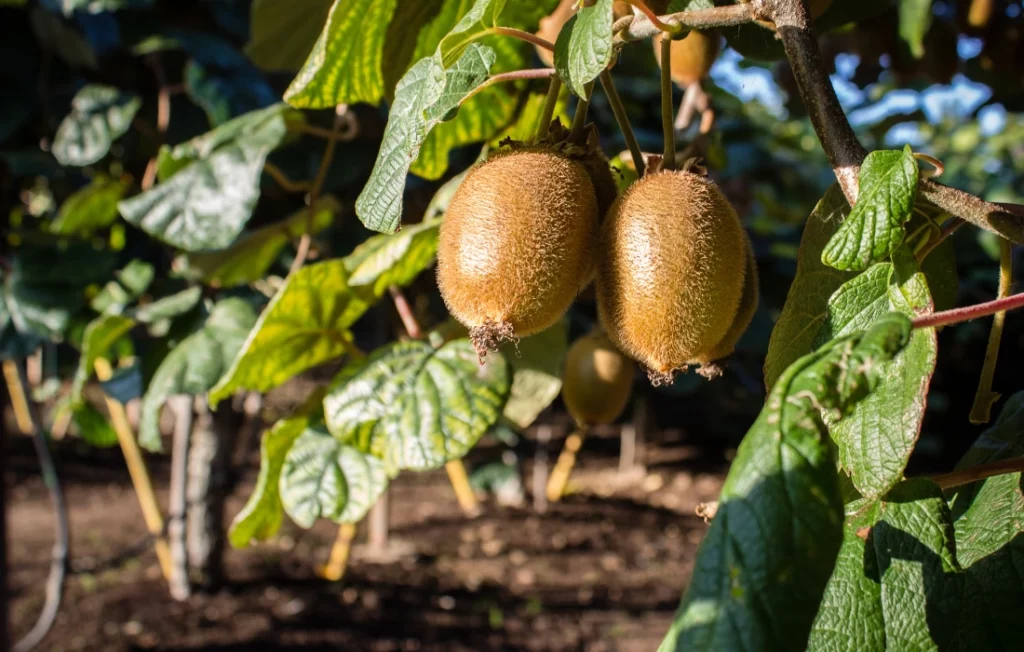
Kiwis have a reputation for being hardy, but growing them can sometimes present surprises: spreading brown spots, leaves that droop after a wet spell, branches that turn brown unexpectedly… Behind these symptoms lies a range of diseases capable of permanently weakening the kiwifruit plant, especially when it thrives in unstable weather or unbalanced soil. How can these diseases be identified and what solutions are available?
- Honey fungus (Armillaria spp.)
- Grey mold (Botrytis cinerea)
- Phytopythium root rot (Phytopythium spp.)
- Phytophthora root rot (Phytophthora spp.)
- Sclerotinia (Sclerotinia sclerotiorum)
- Kiwi bacterial canker (Pseudomonas syringae pv. actinidiae – Psa)
- Chlorosis (nutritional imbalances related to pH)
- Agrobiotop solutions against kiwi diseases
Honey fungus (Armillaria spp.)
Among the most feared diseases affecting kiwifruit, Armillaria holds a special place as it directly attacks the root system. This soil fungus thrives in weakened plants, whether due to water stress, compacted and waterlogged soil, root injuries, or general weakness. The infection begins in the soil, colonizes the roots, and gradually progresses towards the crown. The wood then gradually deteriorates: the white mycelium appears under the bark, embedded in palmettes, and the cambium degrades throughout the affected area.
Over time, the above-ground parts react to this loss of anchorage and nutrition: the leaves wilt, yellow, and become smaller, and overall vigor declines. The decline is slow but irreversible, often leading to the plant’s death within one to two years.
Grey mold (Botrytis cinerea)
Botrytis cinerea can affect both healthy tissue and weakened, injured, or aging organs. On kiwifruit, it targets the leaves, flowers, and fruit . The first signs appear as brown spots and a characteristic gray mold , which then develop into soft rot. An affected fruit quickly becomes inedible and can contaminate an entire batch.
Humid and mild periods strongly favor the disease, especially in spring and autumn. In the orchard, necrosis is often observed on the blossoms, as well as cankers on young shoots. During storage, the disease can appear after several weeks, even at low temperatures, with the fruit softening, turning brown, and then becoming covered in mycelium. In the worst cases, losses can reach significant levels, especially when batches are stored for extended periods.
Do you need a natural solution against kiwi diseases?
Phytopythium root rot (Phytopythium spp.)
Phytopythium species occupy a borderline zone between fungi and oomycetes, and some of them directly attack kiwifruit, notably Phytopythium vexans and P. helicoides . These pathogens are now found in several producing countries. Their action begins at the roots, where dark, moist lesions appear , which then spread to the crown.
As the disease progresses, the above-ground parts of the plant show characteristic signs: leaf curling, necrotic spots, reduced growth, and, in severe cases, total plant death. Some countries have also reported fruit involvement, indicating a wider potential for infection than previously thought.
Phytophthora root rot (Phytophthora spp.)
This disease, prevalent in waterlogged soils, primarily affects the main roots, with white to pinkish or brick-red lesions developing over time. The fine roots, essential for nutrient absorption, quickly disappear.
The fungus then reaches the crown, where flame-shaped areas of damaged bark appear . This tissue destruction blocks the circulation of water and minerals, severely weakening the plant. The kiwifruit then begins to wilt, especially during hot periods when water requirements are high. The dieback follows a patchy pattern, often linked to waterlogged areas in the soil.
Sclerotinia (Sclerotinia sclerotiorum)
Sclerotinia is particularly feared for its ability to rapidly colonize kiwi flowers and fruits. The fungus produces a dense, white mycelium that envelops the infected organs, then forms hard, black sclerotia, veritable survival structures.
On fruit, the disease begins as a moist depression . As the infection progresses, the fruit may drop prematurely. If the plant manages to partially heal, the fruit becomes deformed. This disease is particularly problematic because the sclerotia persist for a long time in the soil or in plant debris.
Kiwi bacterial canker (Pseudomonas syringae pv. actinidiae – Psa)
Bacterial canker is among the most closely monitored diseases in kiwi orchards. The bacteria can infect leaves, flowers, and especially wood. The first symptoms appear on the reproductive organs with the drying out of the anthers . The leaves then show angular, necrotic spots bordered by a yellow halo.
On branches and trunks, the disease causes cankers from which a whitish to brown exudate oozes. The wood beneath the bark turns brown, indicating significant tissue weakening. Infected plants often produce suckers below the affected area. This disease leads to reduced yield, lower fruit quality, and, in severe cases, plant death. Its progression can be rapid, especially in humid conditions.
Chlorosis (nutritional imbalances related to pH)
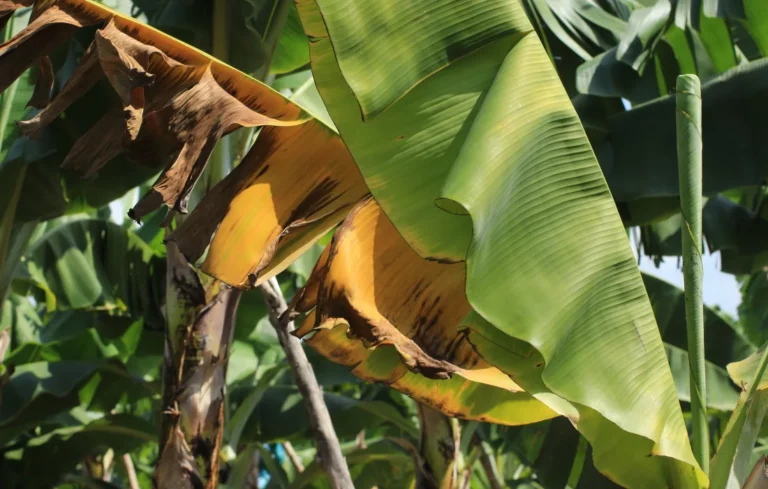
Chlorosis is one of the most common problems in kiwi cultivation. It manifests as a yellowing of the leaves , often pronounced between the veins. This phenomenon is most often caused by soil that is too alkaline for this species, which prefers a slightly acidic pH.
Limescale disrupts the absorption of certain nutrients, particularly iron. Depending on the missing element, the discoloration patterns vary:
- iron deficiency : yellow leaves with bright green veins;
- Magnesium deficiency : yellowing at the edges of the leaves;
- Manganese deficiency : diffuse pale areas.
When these imbalances persist, growth slows and overall vigor decreases. An unsuitable pH, whether too low or too high, permanently disrupts the kiwi’s mineral supply and promotes the development of other physiological problems.
Agrobiotop solutions against kiwi diseases
Soil improvement (aeration, oxygenation and decompaction): indirect action on the diseases described above
For action on kiwi diseases :
- CHITOPROTECT (chitosan)
- BENTOBIO
- YAKAPRO
Addressing trace element deficiencies:
Biostimulants
- YAKALFER (iron deficiency)
- YAKADOP (strengthens and boosts vegetation, corrects various trace element deficiencies)
We have comprehensive programs for applying AGROBIOTOP solutions to kiwifruit. Please feel free to contact us for more information .