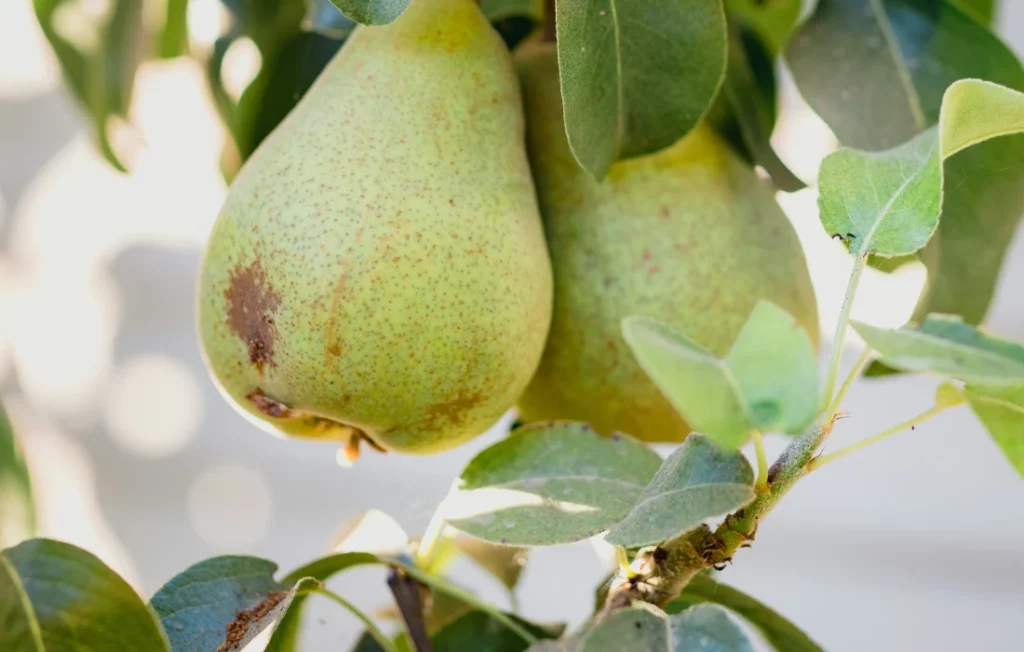
The pear sawfly (Hoplocampa brevis ) is a hymenopteran insect whose larva attacks young fruit, causing premature fruit drop and sometimes leaving trees almost empty even before the end of flowering. For fruit growers, this threat is not insignificant: it requires rigorous observation and a reasoned approach, combining prevention, monitoring, and solutions adapted to the orchard.
Identification and behavior of Hoplocampa brevis
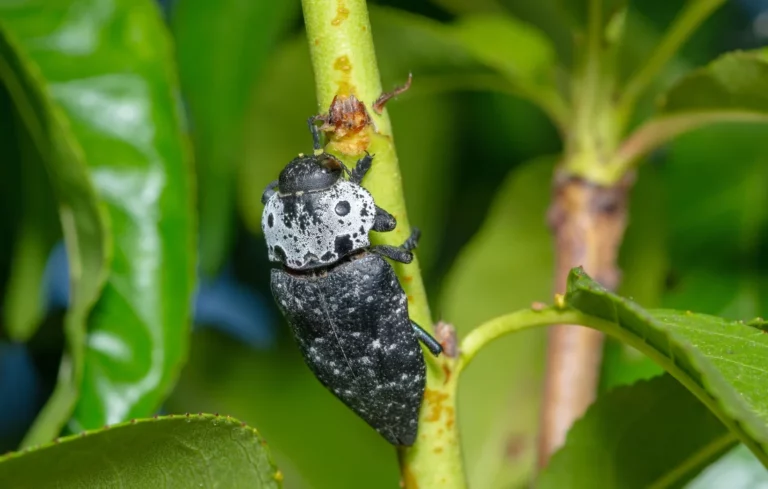
The pear sawfly (Hoplocampa brevis ) is a small hymenopteran. Unlike its close relative that attacks apple trees, this species is found exclusively on pear trees. The adult measures between 4 and 7 millimeters in length. Its body is reddish-yellow to black , with a yellowish-brown underside , yellow legs , and thin, transparent, hyaline wings . Its flight is observed during flowering, between late March and early April, depending on weather conditions. During this period, the adults feed on pollen and complete their reproductive cycle.
Their activity is brief: the flight lasts only one to three weeks. It is during this interval that the female, equipped with an ovipositor, makes incisions in the still-closed flower buds to lay her eggs. These tiny eggs (barely a millimeter) remain hidden under the calyx epidermis. Ten to thirteen days later, the larvae emerge, often before the flowers are even fully open.
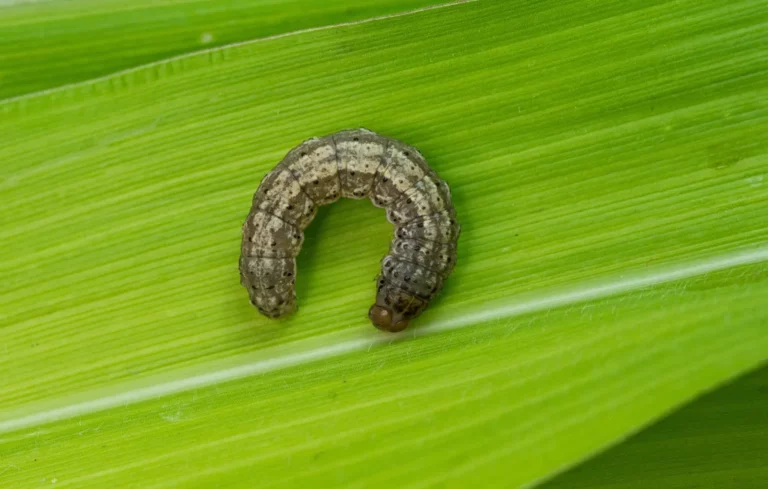
The larva measures 8 to 15 millimeters depending on its stage of development. It is yellowish-white to grayish-yellow in color , with a well-defined reddish-brown head . It is slightly curved, soft, and segmented.
Their activity is brief: the flight lasts only one to three weeks. It is during this interval that the female, equipped with an ovipositor, makes incisions in the still-closed flower buds to lay her eggs. These tiny eggs (barely a millimeter) remain hidden under the calyx epidermis. Ten to thirteen days later, the larvae emerge, often before the flowers are even fully open.
What damage does the pear sawfly cause to fruit?
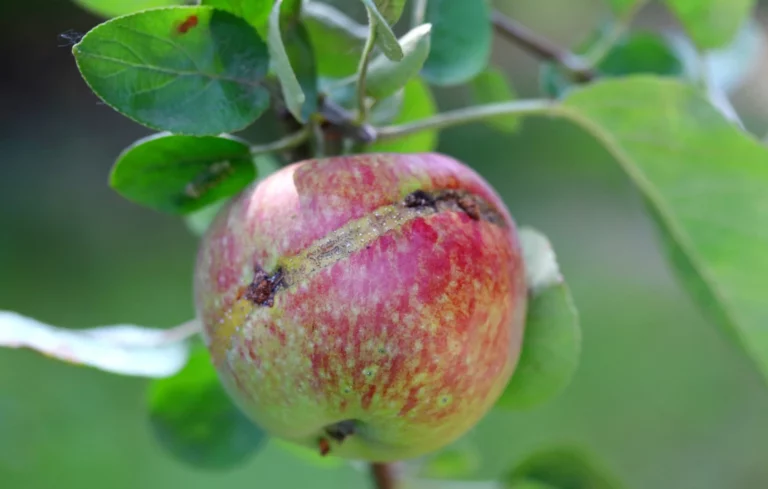
The young larvae begin their activity by burrowing a tunnel beneath the surface of the fruit, just at the base of the sepals. This area quickly shrivels, an early sign of infestation. Next, the larva progresses towards the core of the fruit, where it attacks the seeds—a crucial stage, as the damage is then irreversible. This is known as the primary infestation.
After leaving the first fruit, the larva can migrate to a second , or even exceptionally a third, triggering a series of secondary attacks. This behavior increases the pest’s spread throughout the orchard.
The symptoms are quite characteristic:
- Presence of internal galleries and discharges of wet excrement visible on young pears.
- Fruits that are deformed or pierced at their base , often marked with a small blackish spot.
- Premature drop of pears , sometimes in large numbers before fruit set.
At the end of its development (approximately three weeks after hatching), the larva drops to the ground and burrows a few centimeters deep. There, it spins a silken cocoon and enters diapause until the following spring. This underground stage makes control more complex, as the larva is then protected from most direct interventions.
Do you need a natural solution against pear sawfly?
How to monitor and detect it?
The key to effective management lies in monitoring . Before any intervention, it is essential to determine the precise timing of adult flight. This dictates the egg-laying period and therefore the emergence of future larvae.
Monitoring relies primarily on trapping . The traps used are white sticky traps, placed at flowering height in the canopy. These devices attract adults in flight and allow for population density estimation.
Early trapping, before the flower buds burst, helps to:
- identify the start of the flight and assess its intensity,
- define the intervention threshold,
- synchronize control measures with the pest’s most vulnerable period.
Direct observation is a useful complement to trapping. Gardeners and arborists can inspect flower buds at the G stage: the presence of incisions at the calyx often indicates recent egg-laying.
What cultural and prophylactic measures are needed against pear sawfly?
The fight against the pear sawfly begins primarily with reasoned prevention . The goal is to reduce populations without disrupting the biological balance of the orchard.
Among the most effective actions:
- Collect and destroy any fruit that has fallen prematurely , as it often carries still-active larvae.
- Lightly work the soil at the end of winter to disturb the cocoons in diapause, but avoid periods that are too humid.
- Maintaining living soils , rich in beneficial fauna, which promote the natural predators of larvae and adults.
- Prune in a reasoned manner , avoiding excessive cuts that disrupt the tree’s structure and make it more vulnerable.
Agrobiotop solutions for controlling pear sawfly
We develop natural solutions to combat this pear tree pest. For pear sawfly, we recommend:
- YAKAPRO (Foliar spray application. Dosage: 10%. May disrupt the coloration of white flowers)
Mixture of Agrobiotop solutions:
- CHITOPROTECT (chitosan)
- BENTOBIO (Sodium bentonite clay)
For foliar application at the green bud stage.
Mixture: 300 liters of water per hectare. CHITOPROTRECT 1.5L + 3kg BENTOBIO/300L of water/hectare.
Does not block photosynthesis in apple trees.
Do not hesitate to contact us for more information on the protocol to apply against this pest.
Other pests of fruit trees: