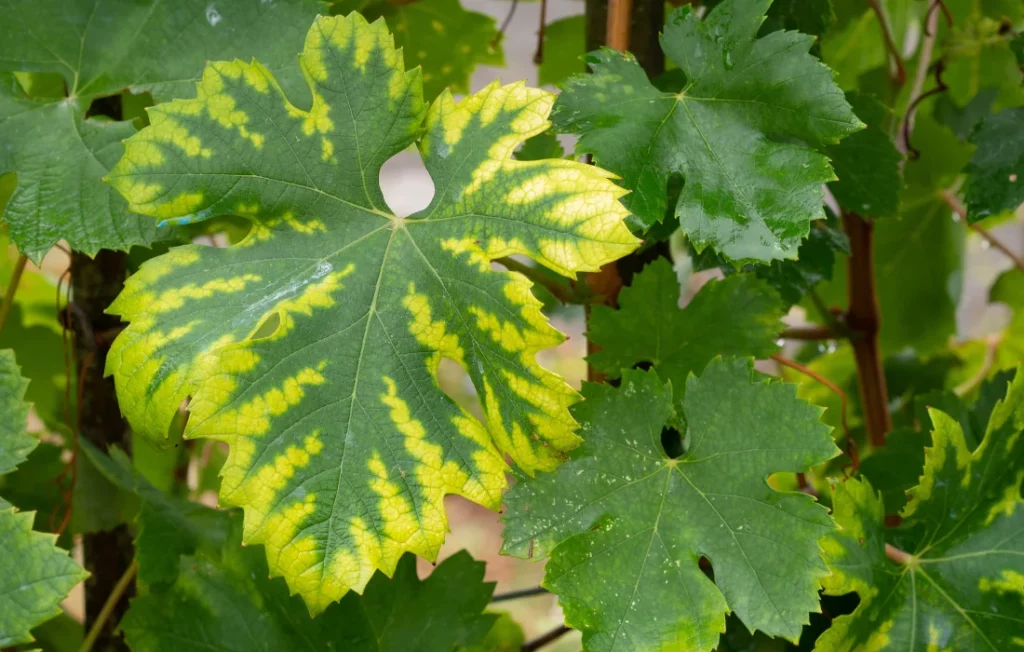
Iron chlorosis in grapevines is caused by poor iron availability to the plant, linked to a genuine deficiency or, more often, to soil characteristics. Frequently overlooked or underestimated, it hinders photosynthesis, progressively weakens the vines, and can lead to losses in both yield and quality. When it becomes chronic, it can cause the most affected vines to decline or even die. Agrobiotop presents here the causes, symptoms, and natural remedies to use for both prevention and treatment.
- Iron chlorosis of the vine: what are we talking about?
- The three types of iron chlorosis
- How to recognize the symptoms on the vine?
- What are the agronomic consequences for the vineyard?
- Factors contributing to the development of iron chlorosis
- Preventing iron chlorosis from the design and management of the plot
- Agrobiotop solutions for controlling iron chlorosis in viticulture
Iron chlorosis of the vine: what are we talking about?
Chlorosis refers to a chlorophyll deficiency that results in a progressive discoloration of the leaves, usually in the form of yellowing. In grapevines, it is most often linked to insufficient iron availability , either because this trace element is actually lacking in the soil, or because the plant is unable to absorb, transport, or utilize it properly.
The vine’s iron requirements remain low, but this element plays a role in major physiological mechanisms. It participates in plant respiration and chlorophyll synthesis. When iron becomes unavailable, chlorophyll production decreases, photosynthesis is disrupted, and the vine produces less energy. If this phenomenon persists, the vines build up fewer reserves and become more vulnerable over the course of growing seasons.
The three types of iron chlorosis
Several mechanisms can accumulate in the same plot, which sometimes makes field diagnosis difficult.
- True chlorosis corresponds to a genuine iron deficiency in the soil. The iron present is insufficient to meet the vine’s needs. This situation remains rare in vineyards.
- Induced chlorosis occurs when iron is present in the soil but is not in a form that can be absorbed by the roots. It is common in soils with a high pH, rich in active lime or bicarbonates. Poor soil aeration can also reduce iron availability and disrupt root activity.
- Physiological chlorosis occurs when the vine absorbs iron but is unable to utilize it properly. Iron transport to the leaves can be limited by a lack of citric acid, often linked to insufficient carbohydrate reserves. Iron can also reach the leaves and then become insoluble, rendering it unusable by the plant.
How to recognize the symptoms on the vine?
Symptoms appear mainly during the active growth period and are often more intense in the spring, around flowering time.
- The youngest leaves are usually the first to be affected. The leaf blade gradually turns yellow, while the veins remain noticeably greener.
- When chlorosis worsens, the leaf blade may turn pearly white . The areas between the veins then dry out, often starting from the edges of the leaf.
- In the most advanced cases, the leaf tissues become completely necrotic. This stage, called “Cottis” , corresponds to a complete destruction of the leaf.
- Growing branches may have shorter internodes, a sign of slowed vegetative development.
Do you need expertise and solutions against iron chlorosis ?
What are the agronomic consequences for the vineyard?
Iron chlorosis causes a temporary halt or significant reduction in photosynthesis. As a result, the vine produces less sugar, nourishes its growing organs less efficiently, and accumulates fewer reserves for the following year. Vegetative cycles may shorten, vigor decreases, and yields gradually decline when symptoms recur from one growing season to the next.
The quality of the harvest can also be affected. A chlorotic vine is more susceptible to coulure (poor fruit set) and millerandage (uneven ripening), two phenomena that reduce the number of berries formed or lead to significant heterogeneity in the bunches. The sugar content of the grapes can decrease, impacting the ripeness and quality potential of the harvest. On the most affected vines, the weakening becomes persistent and can lead to progressive decline, or even death.
Factors contributing to the development of iron chlorosis
Iron chlorosis occurs more easily when soil conditions limit root activity or reduce iron availability to the vine.
- Soils that are too wet or waterlogged disrupt root function and promote situations of asphyxiation.
- Calcareous soils , especially those rich in active limestone, make iron less available to the roots.
- A high pH , common in alkaline soils, reduces the solubility of iron and limits its assimilation by the vine.
- Periods of drought slow down the absorption of mineral elements, because the roots have less water to take up the iron present in the soil.
- Compacted soils lack aeration, which promotes the formation of bicarbonates and increases the risk of root asphyxiation.
- Lack of light can accentuate the expression of symptoms by limiting the photosynthetic activity of the vine.
Preventing iron chlorosis from the design and management of the plot
Iron chlorosis can generate high costs when the most affected vines have to be uprooted and replaced. Replacing a vine involves the cost of the plant, planting fertilizer, trellising, and several years before a return to satisfactory production. Prevention therefore remains the most sustainable and economical approach to limiting the occurrence of this physiological disorder.
Before planting, soil analysis assesses the pH, total limestone content, active limestone levels, and risks related to soil structure. A subsoil analysis can complement this assessment when the plot exhibits significant heterogeneity or limestone deposits. This step helps identify the most sensitive areas before planting the vineyard.
- Promote drainage of plots prone to excess water in order to preserve root activity.
- Limit compaction caused by machinery traffic and preserve an aerated soil structure.
- Be careful with soil work in spring on calcareous soils, as some interventions can reinforce conditions favorable to chlorosis.
- Maintain a good level of organic matter through organic amendments adapted to the context of the plot.
- Avoid excessive nitrogen fertilization, which can worsen imbalances in at-risk soils.
Agrobiotop solutions for controlling iron chlorosis in viticulture
We develop natural solutions that improve soil decompaction, aeration, and oxygenation:
For your vineyards, we recommend the following solution:
- YAKALFER : the alternative biostimulant to iron chelate ( Soil or foliar application, Application rate: 10 to 20 liters/hectare )
Feel free to contact us for advice and for the implementation of the solutions presented above.
D’autres conseils sur les vignes :
Photo : Shutterstock