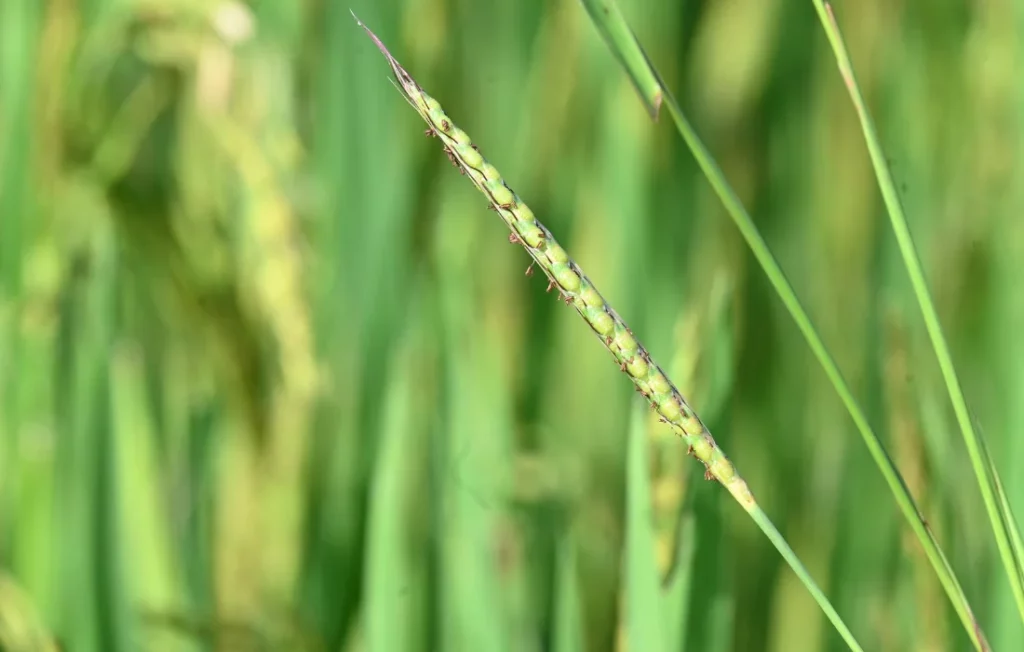
Common blackgrass (Alopecurus myosuroides ) is a widespread annual grassy weed in European cereal farming systems. Particularly common in winter cereals, including wheat, it can also negatively impact other crops in the rotation due to its rapid reproduction and competition with cultivated plants. Agrobiotop supports cereal growers and farmers in identifying at-risk situations and implementing appropriate natural solutions for the sustainable control of blackgrass.
What is field foxtail?
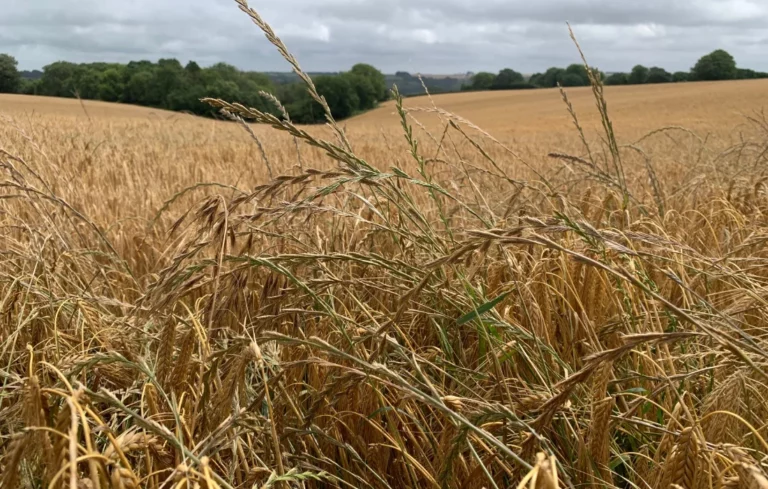
Common blackgrass, or Alopecurus myosuroides , is an annual weed belonging to the Poaceae family. It is also known as false rye, appiccicu, blayon, famine, rat’s tail, or trompe-bonhomme. Common in winter cereal crops, it is particularly problematic in fields of common wheat, barley, and triticale , as well as in crop rotations dominated by cereal crops.
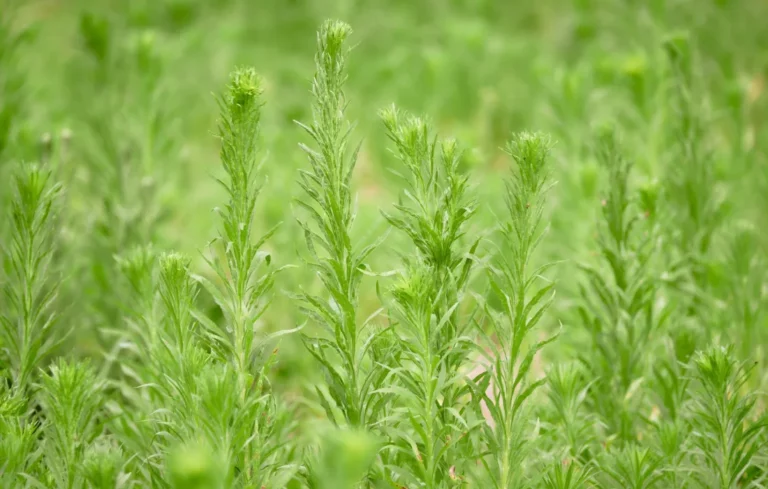
At the seedling stage, blackgrass has split sheaths, the base of which is often tinged with mauve for one to two centimeters, with visible veins. It lacks auricles, which distinguishes it from several other weedy grasses. Its ligule is oval and whitish. From the one-leaf stage onward, its sometimes glossy leaf blade can be confused with ryegrass At maturity, the stems generally measure between 30 and 80 cm in height, the leaf blades can reach 15 cm, and the tillers are initially spreading before becoming upright.
The biology of blackgrass explains how quickly an infestation can become established . Its seeds germinate primarily in the top few centimeters of soil, making them vulnerable to shallow tillage but also allowing them to benefit from every seedbed preparation. A single plant can produce between 500 and 3,000 seeds. The seed bank decreases fairly rapidly in the soil, but each seeding strongly replenishes the plot and maintains the pressure for several growing seasons.
Blackgrass also exhibits primary and secondary dormancy . A significant proportion of the seeds, sometimes nearly half, can enter secondary dormancy. Therefore, not all seeds germinate simultaneously, even when temperature and humidity conditions appear favorable. This staggered germination complicates the planning of agronomic practices and necessitates monitoring plots over several years.
Do you need expertise and solutions against foxtails?
Why is blackgrass such a problematic weed?
Blackgrass directly competes with cereals for water, light, nutrients, and available space within the canopy . When it establishes itself early and densely, it reduces cereal plant growth, limits tillering, and disrupts stand structure. Yield losses can become significant in heavily infested fields, particularly when the crop lacks vigor early in its growth cycle or subsequently experiences water stress.
Its harmful effects are not limited to the current crop yield. Each plant that produces seeds increases the seed bank and puts pressure on subsequent crops. Blackgrass can also hinder harvesting, complicate sorting, and degrade the quality of the harvested batch. In the most affected fields, it can promote lodging of cereals and exacerbate the health risks associated with certain pathogens, such as ergot or take-all. When the pressure is very high, establishing the following crop can also become more difficult.
Why are cereal crops the most affected?
Blackgrass thrives in crop rotations dominated by winter crops, especially when cereals are sown early. The weed’s emergence period coincides with that of wheat, barley, or triticale. Soil preparation and seedbed setup then create favorable conditions for its germination, at the same time as the crop.
The most vulnerable systems often involve a combination of several factors:
- a short rotation with a strong presence of wheat, barley, rapeseed or other winter crops;
- early sowings, which coincide with the main periods of emergence of blackgrass;
- heavy, cool or moist soils, capable of retaining water in autumn;
- soil cultivation without repeated turning over for several years;
- pressure already established in the plot;
- a repetition of identical practices from one campaign to the next.
Blackgrass thus becomes an indicator of overly regular crop rotations. The more winter crops follow one another, the more favorable conditions its life cycle finds to reproduce. It readily germinates in rapeseed and early-sown winter cereals, while the introduction of spring or summer crops disrupts its emergence schedule.
What crops other than cereals are affected?
Blackgrass is not limited to cereal crops. Rapeseed is frequently affected, as its early sowing creates a favorable window for autumn emergence. Winter protein crops can also be heavily impacted when the field already has a high seed bank. Spring crops are less favorable to the blackgrass’s usual life cycle, as they shift planting from its preferred germination period. However, they can still be negatively affected if the previous infestation was significant or if seeds have been moved within the field.
What soils and conditions favor the black foxtail?
Blackgrass establishes itself more easily in plots where the soil retains moisture and where the crop exerts limited competition at the start.
- Clay, clay-loam and silty soils are often the most affected.
- Medium-heavy to heavy soils, moist or with high water retention capacity, promote germination.
- Compacted areas can create conditions conducive to the establishment of weeds.
- Mild and wet autumns increase the risk of significant germination.
- Sparse or irregular stands leave more space and light for the foxtail.
The pressure can vary considerably within the same field. Heavy, damp, or compacted areas sometimes concentrate the majority of the infestation, while lighter areas remain less affected. This distribution must be taken into account during observations. Seeds can also be dispersed to areas initially less infested by tillage, harvesting equipment, combine harvesters, or repeated passes of machinery.
What agronomic levers can be used against blackgrass?
The fight against blackgrass relies on a combination of levers aimed at limiting emergence, reducing seed production and breaking the weed cycle at the rotation level.
- Diversify the rotation by introducing spring or summer crops and alternating winter crops with more dicotyledons.
- Delay the sowing date of wheat when agronomic conditions allow, in order to reduce overlap with the main emergence of blackgrass.
- Use false sowing with discernment, because tilling the soil too close to sowing can also trigger new emergence in the following crop.
- Limit soil disturbance at planting time to avoid bringing new seeds up into the germination zone.
- Consider intermittent tillage after heavy infestations, for example every three or four years, in order to manage the seed bank over time.
- Perform stress tests when repeated failures are observed, in order to avoid repeating poorly adapted strategies.
- Monitor the surviving blackgrass in May and June , as a few plants protruding from the wheat already constitute a warning sign.
Agrobiotop solutions for controlling blackgrass
In summary, foxtail often proliferates in:
- compacted, poorly oxygenated soils
- moist soils with a high water retention capacity
We therefore recommend these solutions:
Saving time in the fields, quick and easy to implement, SILIBOOST (powder) and SOUFREL (granules) are the two key allies for eliminating blackgrass in crops. Don’t hesitate to contact us for advice and assistance in implementing the solutions described above.iés pour éliminer le vulpin dans les cultures. N’hésitez pas à nous contacter pour tout conseils et pour la mise en œuvre des solutions présentées ci-dessus.
Photo : Shutterstock