Episodes of intense heat and drought can disrupt cereal growth, accelerate leaf drying, and negatively impact grain filling. Agrobiotop, experts in agrobiology, offer a combination of BENTOBIO and CHITOPROTECT , designed to support crops during these periods of stress through two complementary modes of action.
BENTOBIO and CHITOPROTECT: two complementary solutions
BENTOBIO is composed of montmorillonite. Its mineral analysis indicates, in particular, the presence of potassium in the form of K₂O:
- SiO₂: 63.7%
- Al₂O₃: 16.7%
- Fe₂O₃: 5.5%
- CaO: 1.5%
- MgO: 2.4%
- Na₂O: 2.5%
- K₂O: 1.3%
- TiO₂: 0.6%
CHITOPROTECT , based on chitosan, is combined with BENTOBIO to promote the maintenance of spraying on leaf surfaces and to support the plant’s response mechanisms to stress.
This association is intended for cereals such as wheat, barley, oats, corn or rice , particularly when climatic conditions become challenging.
What is the role of potassium in cereals?
For cereals (wheat, barley, oats, maize, rice, etc.), potassium acts rapidly by activating several enzymes involved in metabolism. It improves photosynthesis, promotes the transport of sugars to the grains, regulates stomatal opening, thus improving water use, and increases resistance to drought and lodging. This supply also improves grain filling, weight, and quality, and limits the effects of water stress and evapotranspiration.
We hypothesize that the combination of BENTOBIO (potassium-enriched bentonite) and CHITOPROTECT (chitosan-based), applied as a foliar spray, promotes the gradual availability of potassium. Upon contact with the spray water and the moisture present on the leaf surface, the biofilm formed by CHITOPROTECT helps to keep the formulation on the leaf, while the bentonite gradually releases K⁺ ions, unlike a liquid potassium solution. This controlled release could prolong the contact time between potassium and the leaf surface and thus improve its absorption by plant tissues. CHITOPROTECT promotes the formation of an adherent biofilm on the leaf; increases the spray residence time, limits runoff and leaching, and maintains local humidity favorable to the dissolution of potassium salts.
BENTOBIO constitutes a mineral support retaining part of the potassium; gradually releases K⁺ ions upon contact with water.
Enzyme activation
Osmotic regulation: the influx of K+ into cells attracts water, which maintains turgor and proper tissue function. Through the accumulation or efflux of K+, cells retain control over the opening and closing of stomata, influencing CO2 exchange and transpiration.
Note that BENTOBIO is mainly used to correct and support the crop during a period of high heat and drought, but it does not replace potassium fertilization.
Do you need expertise and solutions to deal with the extreme heat affecting your cereal crops ?
BENTOBIO + CHITOPROTECT supplement
We recommend this CHITOPROTECT /BENTOBIO supplement in
- A period of intense heat is forecast (preventive).
- Tillering at the beginning of stem elongation
- Montaison
- Flowering begins
- The beginning of grain filling, or the period, is very sensitive to heat.
During this period of intense heat and drought, spraying is best done in the morning or late afternoon.
Field checks
BENTOBIO reflects part of the solar radiation, reduces the surface temperature of the leaves by a few degrees, limits sunburn on the leaves and ears, reduces evapotranspiration.
The goal of the association between BENTOBIO and CHITOPROTECT
Maintain more active photosynthesis, reduce premature drying of leaves and stamens, promote better grain filling.
CHITOPROTECT has partnered with BENTOBIO to help plants better withstand high temperatures and drought. CHITOPROTECT addresses high temperatures and drought, but its action differs from and complements that of BENTOBIO. CHITOPROTECT does not reduce or lower temperatures around the leaves, but it primarily works by triggering the plant’s defense mechanisms. It signals mild stress to the plant, which activates defense genes, produces protective enzymes, and enhances its ability to respond quickly to stress. During periods of high heat or water scarcity, plants produce excessive free radicals, leading to oxidative stress.
CHITOPROTECT stimulates antioxidant systems such as superoxide dismutase (SOD), catalase (CAT), and peroxidases (POD). These elements protect cell membranes and chloroplasts. CHITOPROTECT promotes the partial closure of stomata during periods of drought or high temperatures and reduces water loss through evapotranspiration, thereby improving and maintaining cell turgor under drought stress. It helps maintain chlorophyll activity, photosynthetic efficiency, and leaf function for longer.
To conclude
We observe the combination of two complementary strategies CHITOPROTECT + BENTOBIO linked to promote and protect the development of the crop during periods of high heat and drought.
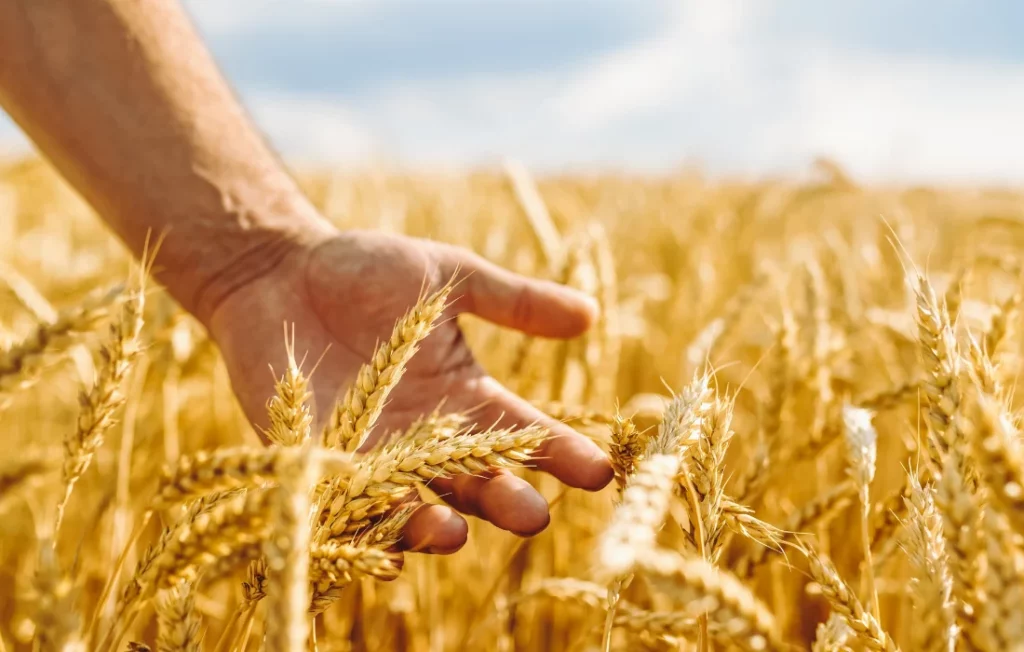
Photo : Shutterstock