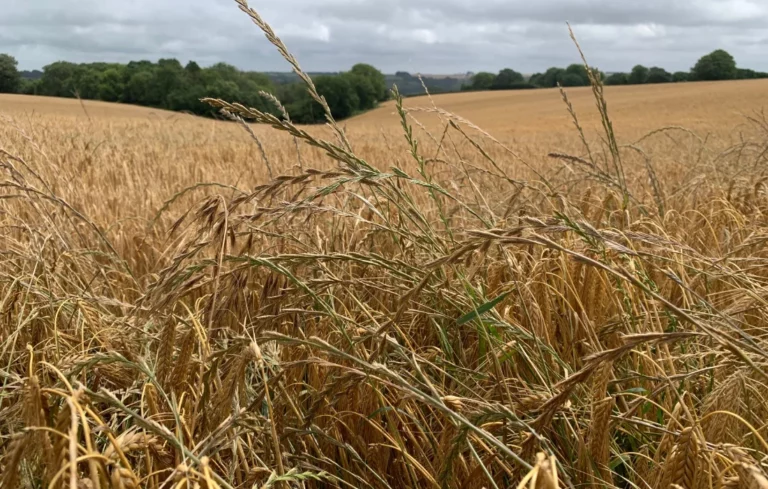
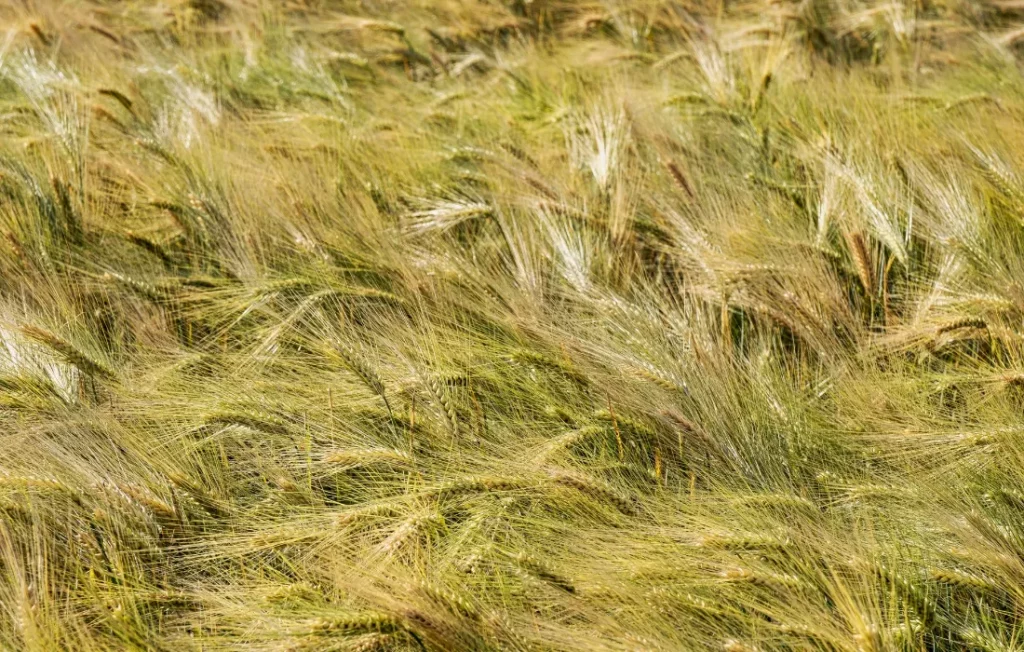
Lodging in cereals occurs when the stalks bend or collapse due to insufficient resistance to the mechanical stresses of the canopy. This phenomenon can have a physiological origin, related to varietal genetics, sowing density, nitrogen fertilization, stand condition, or climatic conditions, particularly rain, storms, and wind. In cultivation, lodging negatively impacts the harvest, reduces yield potential, and can degrade the sanitary quality of the grain and straw. Agrobiotop helps cereal farmers better identify risk factors, prevent lodging, and develop appropriate control strategies.
What is cereal lodging?
Lodging is a vegetation failure in which plants partially or totally fall to the ground. It mainly affects cereals, particularly common wheat, durum wheat and barley, but can also affect legumes, rapeseed, flax or sunflower.
In cereals, lodging most often results from mechanical weakness in the stem: it can no longer withstand the swaying motion caused by the wind, the effects of rain, the weight of the ear, or the load of the grains. Less frequently, lodging can be linked to soil loosening or a weakness in the root system, with the entire plant toppling over.
The main types of cereal lodging
Lodging can be physiological, parasitic or root-related, depending on the main cause of the fragility observed in the field.
- Physiological lodging occurs when the stems are not strong enough to remain upright. It is favored by excessively long internodes, thin stem walls, or an insufficiently resistant stem base. The first nodes play a major role in the plant’s stability, as they bear a large portion of the mechanical stress. When these areas are weak, the cereal is less resistant to wind sway, rain, and the weight of the ear.
- Parasitic lodging is caused by fungal attacks on the stem. These diseases primarily weaken the base of the plants, reducing their ability to remain upright until harvest. Take-all is one of the diseases associated with this phenomenon, as are certain Fusarium wilts and Rhizoctonia, depending on the circumstances.
- Root lodging occurs when the entire plant tilts over, without a distinct bend in the stem. It can affect durum wheat from the heading stage onward and is less common than lodging due to stem fragility. It is associated with a weak root system or insufficient anchorage in the soil. In this case, the plant doesn’t just bend; it loses its stability at the base.
What are the consequences of the cereal lodging?
Lodging can lead to a significant drop in yield, especially when it occurs early in the growing cycle. In cases of early lodging, losses can reach up to 25 quintals per hectare, as the lodged plants intercept less light, fill the grains less effectively, and remain more exposed to moisture.
Grain quality can also be degraded, particularly when harvesting is delayed or when the cover crop remains flattened to the ground. Harvesting becomes slower, more expensive, and more difficult, with increased potential losses at cutting. From heading onward, the weight of the grains further increases the stress on the stems and can exacerbate any existing weakness.
Do you need expertise and solutions against cereal lodging?
The main risk factors for cereal lodging
Several parameters combine in the occurrence of lodging. The final risk rarely depends on a single factor: it most often results from a balance between the variety, the plant density, the stage of cultivation, fertilization, the soil type and climatic constraints.
The influence of variety
Some cereal varieties are naturally more susceptible to lodging, while others exhibit better stalk strength. Selecting varieties with shorter straw has helped reduce some of the risk, but field performance remains variable depending on the conditions. A variety may perform very well at moderate density, then show its susceptibility when the stand becomes too dense. In deep, fertile, or nitrogen-rich soils, choosing a variety with good stalk strength becomes a major agronomic advantage.
The influence of seeding density
Excessive planting density increases the number of stems at the end of the tillering stage and promotes competition for light. The plants then tend to grow taller, which can result in taller, thinner, and less robust stems. This phenomenon is particularly noticeable when the variety already exhibits average stem strength. Therefore, planting density must be carefully considered based on the planting date, soil type, tillering potential, and varietal susceptibility.
The influence of the sowing date
Sowing too early often promotes abundant tillering and can advance the ear stage by 1 cm. Stem elongation then sometimes begins under conditions of short days and low sunlight, which encourages stem etiolation. A cereal sown too early can therefore produce a dense canopy with longer, more fragile stems. The sowing date must be chosen according to the variety, soil type, and local climate.
The influence of soil type
Deep soils generally allow for high biomass production. This vigor can become a risk factor when the canopy becomes too dense and the crop maintains a high number of stems. In these situations, cereals compete strongly with each other, increasing the risk of internode elongation. Conversely, shallower soils often limit excessive biomass development, thus reducing the risk of lodging, all other things being equal.
The influence of climate at the beginning of the upwelling
The climate between the 1 cm ear emergence and 1-2 node stages strongly influences stem consolidation. High temperatures can reduce elongation and promote the regression of young tillers, thus decreasing canopy density. Rainfall, on the other hand, promotes nitrogen uptake and can increase biomass production. When stem tissues are rich in nitrogen, their carbon-to-nitrogen ratio decreases, making the cell walls less robust. Conversely, good sunlight during stem elongation limits etiolation and reduces early competition for light.
The influence of nitrogen fertilization
Deep soils generally allow for high biomass production. This vigor can become a risk factor when the canopy becomes too dense and the crop maintains a high number of stems. In these situations, cereals compete strongly with each other, increasing the risk of internode elongation. Conversely, shallower soils often limit excessive biomass development, thus reducing the risk of lodging, all other things being equal.
The role of storms, rain and wind
The climate between the 1 cm ear emergence and 1-2 node stages strongly influences stem consolidation. High temperatures can reduce elongation and promote the regression of young tillers, thus decreasing canopy density. Rainfall, on the other hand, promotes nitrogen uptake and can increase biomass production. When stem tissues are rich in nitrogen, their carbon-to-nitrogen ratio decreases, making the cell walls less robust. Conversely, good sunlight during stem elongation limits etiolation and reduces early competition for light.
The role of irrigation
Irrigation can trigger lodging through a mechanism similar to that of a thunderstorm. Water droplets can become trapped in the awns, weighing down the ear and increasing the inward tilt of the stalks. The risk increases as the crop progresses through its growth cycle, because the weight of the grains adds to the stresses already exerted on the plant. Durum wheat and barley are particularly susceptible to this phenomenon. In the presence of wind, water can also concentrate in certain areas of the field, locally increasing the risk of lodging.
What preventative measures can be taken against cereal lodging?
Preventing lodging relies on consistent management from the time of planting, as part of the risk is built up even before the stems are visible.
- Choose a variety adapted to the risk level of the plot.
- Favor varieties with good stem strength in deep, fertile soil or with high potential.
- Adjust the sowing density to the planting date, in order to avoid overly dense planting.
- Adjust the density to the soil type, as deep soil promotes more biomass than shallow soil.
- Avoid sowing too early when the conditions favour excessive tillering.
- Carefully manage nitrogen inputs to limit excesses and avoid excessive growth.
- Maintain a balanced fertilization to avoid weakening the structure of the stems.
- Monitor climatic conditions during the ascent, the period when mechanical resistance is built up.
- Adjust irrigation during sensitive periods, especially when the ears of corn become heavier.
- Use growth regulators when the level of agronomic risk justifies it, without considering them as a substitute for controlled crop management.
How to assess the risk of cereal lodging?
The risk of lodging can be assessed at sowing by considering several factors: varietal susceptibility, sowing density, expected plant population, nitrogen fertilization, and soil type. Climatic conditions between emergence and stem elongation, followed by field observations, allow for a more refined analysis. Calculation tools can also help identify the highest-risk situations.
Our solutions against cereal lodging
We recommend coating your cereal seeds, using:
As well as the application of:
Feel free to contact us for advice and for the implementation of the solutions presented above.
Photo : Shutterstock
Also read: